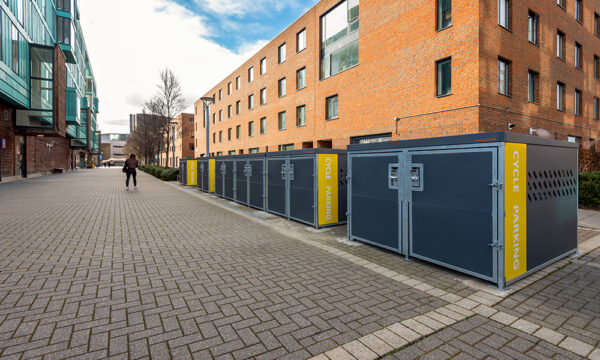
E-bikes and e-scooters are reshaping urban transport, offering compact, low-carbon mobility for both daily commuters and delivery workers. However, the same lithium-ion batteries that enable this transformation have also introduced one of the fastest-growing fire risks in the built environment.
London Fire Brigade (LFB) data shows that incidents linked to e-bikes and e-scooters have more than quadrupled since 2020, with over 400 fires recorded in 2024 and more than 160 in the first five months of 2025 alone. When combined with e-scooter figures, the total number of lithium battery fires across the UK is projected to exceed 500 this year.
For architects, specifiers and design teams, these figures signal a pressing need to consider e-mobility storage and charging as an integral element of external works design. Safe infrastructure must be planned from the outset to reduce fire risk, ensure compliance and support the transition to sustainable urban mobility.
Understanding the risk landscape
Lithium-ion batteries are compact and powerful, storing large amounts of energy within a small footprint. When damaged, overcharged or modified, they can enter a phase known as thermal runaway, releasing heat, smoke and flammable gases in seconds. The result can be catastrophic in enclosed environments, particularly in multi-occupancy buildings where escape routes may be limited.
The causes are well documented. Many incidents arise from:
Use of incompatible or counterfeit chargers
Retrofitted or modified e-bikes using conversion kits
Overcharging or charging overnight in enclosed spaces
Inadequate ventilation or proximity to combustible materials
The problem is further intensified in urban settings where devices are often charged in flats, stairwells or communal corridors. Delivery riders are especially vulnerable, with many reliant on self-purchased or modified e-bikes. The London Fire Brigade, Electrical Safety First and the Office for Product Safety and Standards have each warned that unsafe or unregulated batteries are widespread across online marketplaces.
The regulatory framework
While there is no single piece of legislation addressing e-mobility fire safety, several regulatory frameworks place clear duties on those designing, constructing and managing buildings:
Building Safety Act 2022 – extends responsibility to the design and construction phase, ensuring building safety risks are identified and managed throughout the RIBA lifecycle following the three gateway phases.
Product Regulation and Metrology Act 2025 – introduces powers to control unsafe consumer goods, including lithium-ion batteries and strengthens enforcement around online sales.
Fire services, housing associations and insurers are calling for proactive measures before further regulations are introduced. For designers, this means embedding fire-safe storage and charging infrastructure into external layouts, rather than relying on later operational controls. Many insurance companies are now also requiring specified fire resistance levels to be incorporated into storage areas where charging provision is included.
Designing for prevention
Safe electric mobility device storage depends on careful consideration of location, construction and user behaviour. The following design principles can help mitigate risk and ensure compliance:
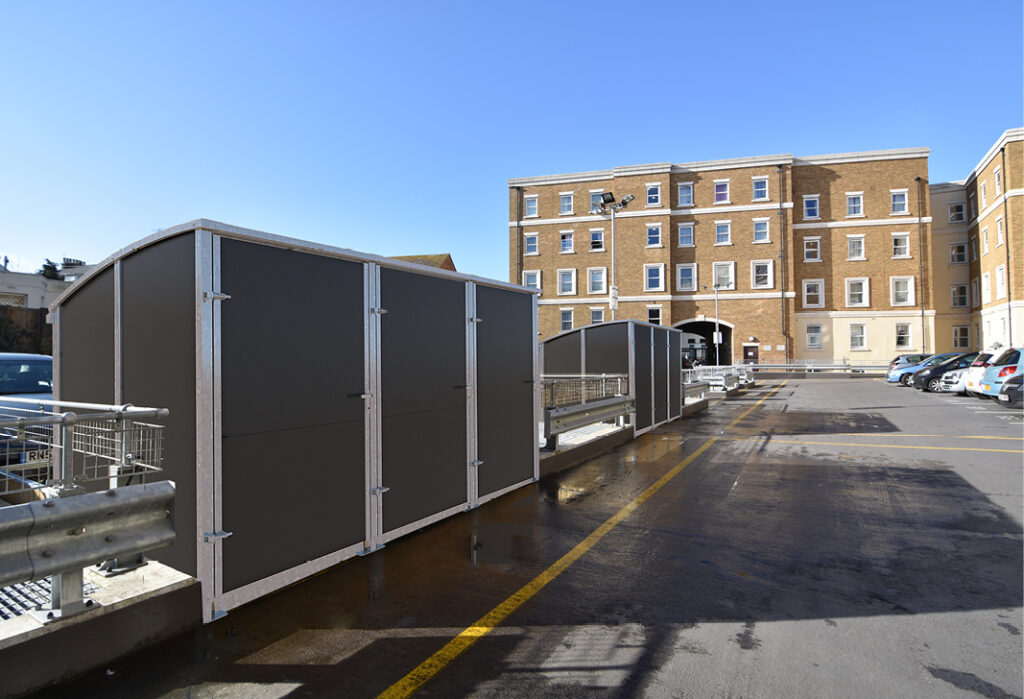
Locate storage externally wherever possible External, purpose-built storage and charging facilities significantly reduce the risk to occupants. Locating units away from entrances and escape routes helps contain potential fires and protect evacuation paths. Specifically, guidance recommends maintaining a minimum distance of 6 metres between the charging store and any point where fire could enter the building.
Use non-combustible construction materials Specify Class A-rated materials and internal fireboard linings to prevent fire spread and protect structure. Avoid combustible finishes or insulation in or adjacent to charging areas. Guidance recommends providing a minimum of 30 minutes’ fire resistance where the 6-metre separation distance cannot be achieved.
Ensure ventilation and temperature control Natural cross-ventilation or dedicated mechanical extraction prevents heat accumulation and disperses any smoke or gases.
Maintain clear access and means of escape Position storage so that it does not obstruct access routes, entrances or service areas. External lighting and signage aid visibility and encourage correct use.
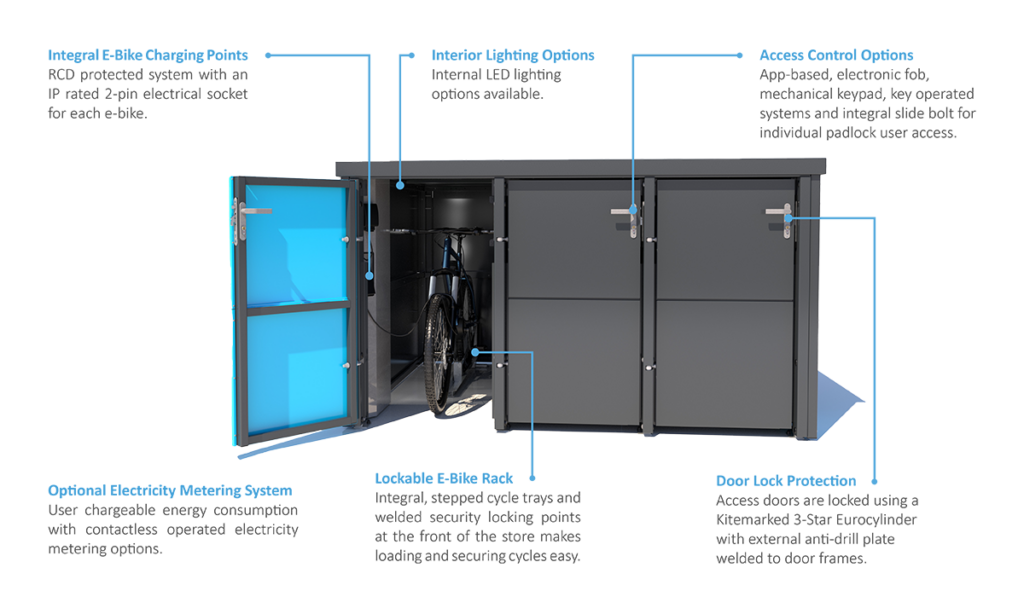
Provide safe, visible charging solutions Integrate charging points within enclosures that comply with electrical safety standards, with emergency shut-off switches and appropriate IP ratings.
Design for convenience and engagement A well-designed facility that is secure, accessible and visually integrated with the site promotes proper use and discourages risky in-home charging.
Specification in practice
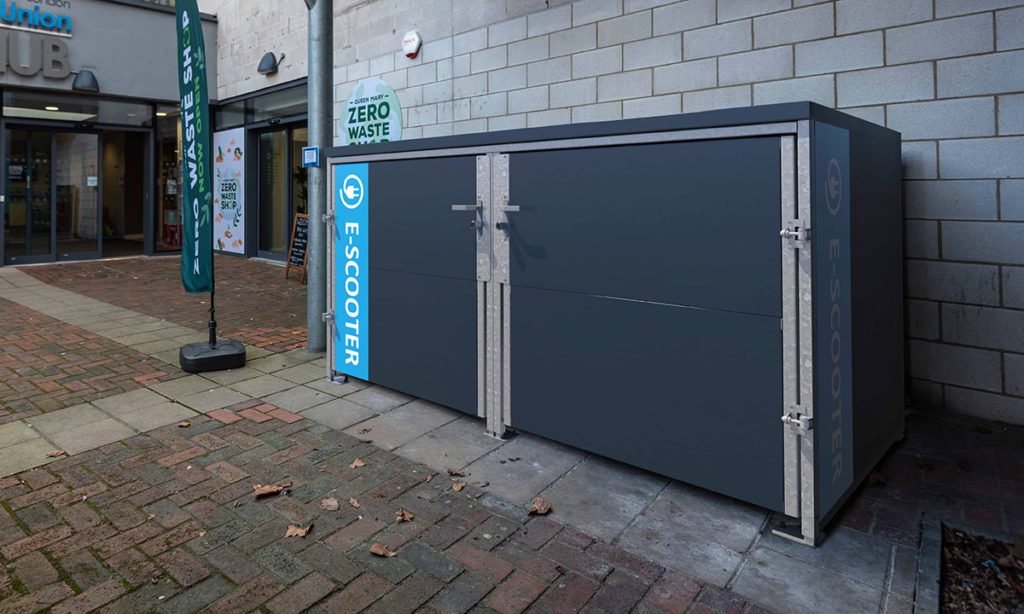
The role of specification is to translate these principles into buildable, compliant solutions. urbanspec’s storage systems are designed to make this process straightforward, allowing specifiers to integrate fire-safe, regulation-ready structures into external works with minimal design time.
urbanspec features include:
Factory pre-engineered units constructed from non-combustible materials
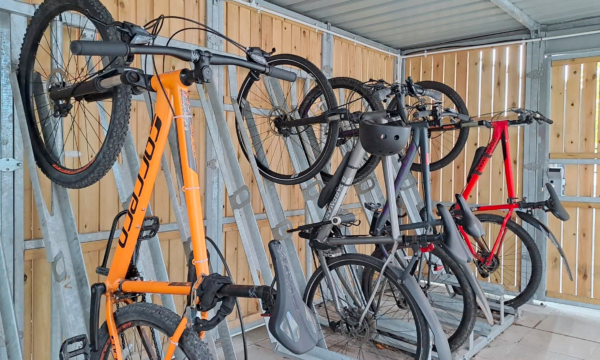
Configurable internal layouts for separation of devices and charging areas
Ventilated panels and roof systems to aid heat dissipation
Options for integrated fire detection and emergency cut-off systems
Compatibility with NBS and BIM workflows for accurate specification
Design support aligned with RIBA Stages 3–5, ensuring technical coordination and compliance
By using configurable modules and established component systems, designers can provide a verifiable fire safety strategy for electric mobility device infrastructure within planning and Building Control submissions.
Learning from precedent
The lessons are already visible. In New York City, a coordinated campaign combining enforcement, education and infrastructure led to a 67% reduction in fatalities from lithium-ion battery fires within a single year. Updated fire codes introduced standards for residential charging rooms, while outdoor charging hubs gave residents safe, accessible alternatives.
In the UK, housing providers such as Gentoo have pioneered proactive initiatives, offering e-vehicle health checks and resident education supported by Tyne and Wear Fire and Rescue Service. These examples highlight how policy, design and education work best together.
For architects, the message is clear: fire safety begins at the design stage. Infrastructure designed to enable safe storage and charging is a vital part of reducing risk, improving compliance and supporting the broader decarbonisation of urban transport.
Designing for the future
Electric mobility devices are here to stay. The challenge is to ensure that integration into the built environment is both safe and sustainable.
As demand for cycle infrastructure and active travel provision grows, architects and specifiers must address the practical reality of how e-bikes and e-scooters are stored, charged and maintained. Designing compliant, external infrastructure supports long-term behavioural change, reducing pressure on residents, housing providers and emergency services alike.
With the number of lithium-ion fires still rising, there is an urgent need for design-led solutions that make safe practice the natural choice. Through pre-engineered systems and coordinated specification tools, urbanspec enables architects to meet this challenge confidently with ongoing technical support. This way, safety and compliance are embedded in every project.
This file is currently not available for download.
Get a Quote - urbanspec 2
We use cookies to ensure that we give you the best experience on our website. If you continue to use this site we will assume that you are happy with it.
To provide the best experiences, we use technologies like cookies to store and/or access device information. Consenting to these technologies will allow us to process data such as browsing behavior or unique IDs on this site. Not consenting or withdrawing consent, may adversely affect certain features and functions.
Functional
Always active
This enables us to personalize our content for you, greet you by name and remember your preferences
Preferences
The technical storage or access necessary for the legitimate purpose of storing preferences that are not requested by the subscriber or user.
Analytical/performance cookies
They help us track visitor numbers and understand how users navigate our site, allowing us to improve its functionality and ensure users find what they need easily.The technical storage or access that is used exclusively for anonymous statistical purposes. Without a subpoena, voluntary compliance on the part of your Internet Service Provider, or additional records from a third party, information stored or retrieved for this purpose alone cannot usually be used to identify you.
Marketing
The technical storage or access is required to create user profiles to send advertising, or to track the user on a website or across several websites for similar marketing purposes.