As national recycling policy evolves, architects and specifiers are playing an increasingly central role in delivering smart, compliant and accessible waste and recycling infrastructure. The introduction of Simpler Recycling will require every household in England, including flats and communal housing, to receive weekly food waste and core material collections by 2026. Translating this mandate into practical design solutions will depend on effective waste strategies and the quality and foresight of architectural planning.
Poorly planned waste facilities are among the most common causes of management issues and dissatisfaction in multi-residential developments. The relationship between space allocation, accessibility and compliance is critical. The most effective schemes integrate waste infrastructure early in design development, ensuring sufficient capacity for segregated streams and safe access for users and collectors. Consideration of planning, fire and building regulations at this stage is vital.
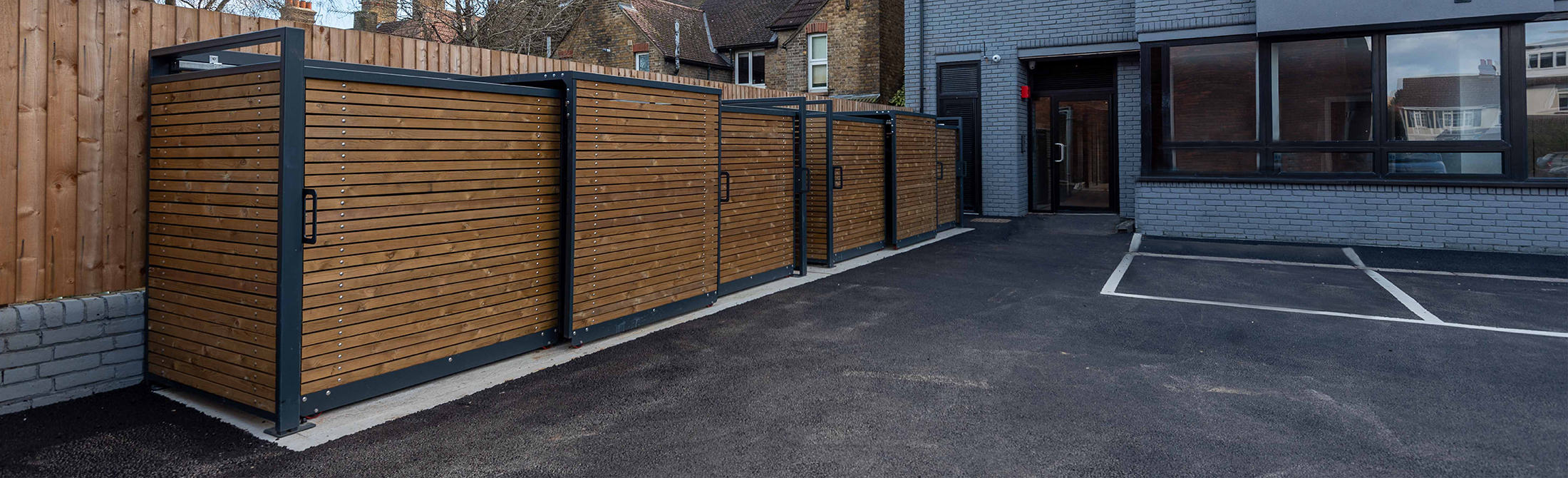
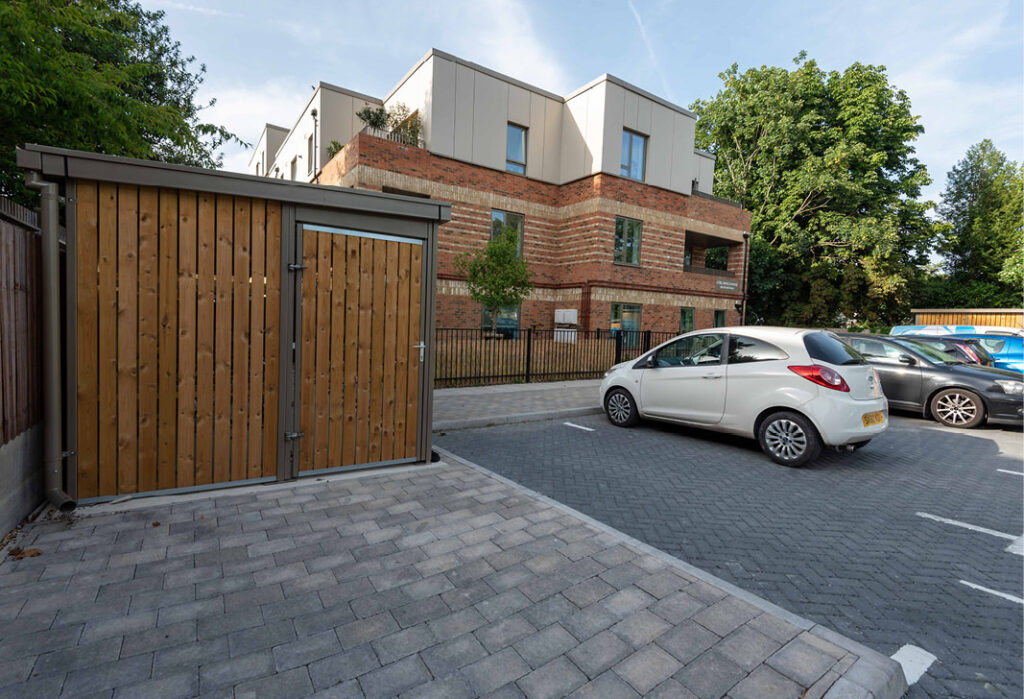
urbanspec systems are designed to make this process simpler. Our bin store and recycling housings provide a pre-engineered foundation for achieving design intent and statutory compliance, while maintaining visual consistency across the public realm.
This approach reflects the 5C framework, ensuring that capacity, convenience, communication, consistency and cleanliness are considered from the outset to deliver effective and compliant waste infrastructure.
Design quality drives behaviour
Recycling performance is strongly influenced by environmental design. Studies by ReLondon show that residents recycle more effectively when bin stores are clean, clearly signed, well lit and easily accessible. Meanwhile, poorly located or cluttered waste areas lead to contamination, misuse and higher management costs.
By incorporating clear apertures and signage, urbanspec’s durable waste enclosures can transform service areas into well-ordered public realm assets. The result is improved resident experience and a stronger reflection of design quality impacting positive recycling behaviours.
Specification made simple
urbanspec supports architects with fully coordinated specification tools and data to simplify delivery at every stage:
BIM and NBS integration for accurate modelling and documentation
Layout and capacity configurator for early-stage planning
Standardised product families compliant with BS EN 1090, ISO 9001 and 14001
CPD seminars providing practical, up-to-date insights on guidance, legislation and best practice in external works design
Project-specific consultancy to help identify the most effective waste and recycling infrastructure solution
A coordinated approach to external works, beyond compliance
urbanspec enables waste and recycling infrastructure to be specified as part of a coordinated external works package alongside cycle parking, canopies and street furniture. This approach reduces design time, ensures visual consistency and simplifies procurement and installation.
The shift towards Simpler Recycling, Extended Producer Responsibility and wider resource efficiency goals represents an opportunity to elevate how waste infrastructure is integrated into our built environment. Thoughtful specification can deliver safe, functional, lasting assets that contribute to the overall success and sustainability of a development.
This file is currently not available for download.
Get a Quote - urbanspec 2
We use cookies to ensure that we give you the best experience on our website. If you continue to use this site we will assume that you are happy with it.
To provide the best experiences, we use technologies like cookies to store and/or access device information. Consenting to these technologies will allow us to process data such as browsing behavior or unique IDs on this site. Not consenting or withdrawing consent, may adversely affect certain features and functions.
Functional
Always active
This enables us to personalize our content for you, greet you by name and remember your preferences
Preferences
The technical storage or access necessary for the legitimate purpose of storing preferences that are not requested by the subscriber or user.
Analytical/performance cookies
They help us track visitor numbers and understand how users navigate our site, allowing us to improve its functionality and ensure users find what they need easily.The technical storage or access that is used exclusively for anonymous statistical purposes. Without a subpoena, voluntary compliance on the part of your Internet Service Provider, or additional records from a third party, information stored or retrieved for this purpose alone cannot usually be used to identify you.
Marketing
The technical storage or access is required to create user profiles to send advertising, or to track the user on a website or across several websites for similar marketing purposes.